D-dimer testing on the Nihon Kohden Celltac α+ MEK-1303
16. November 2026
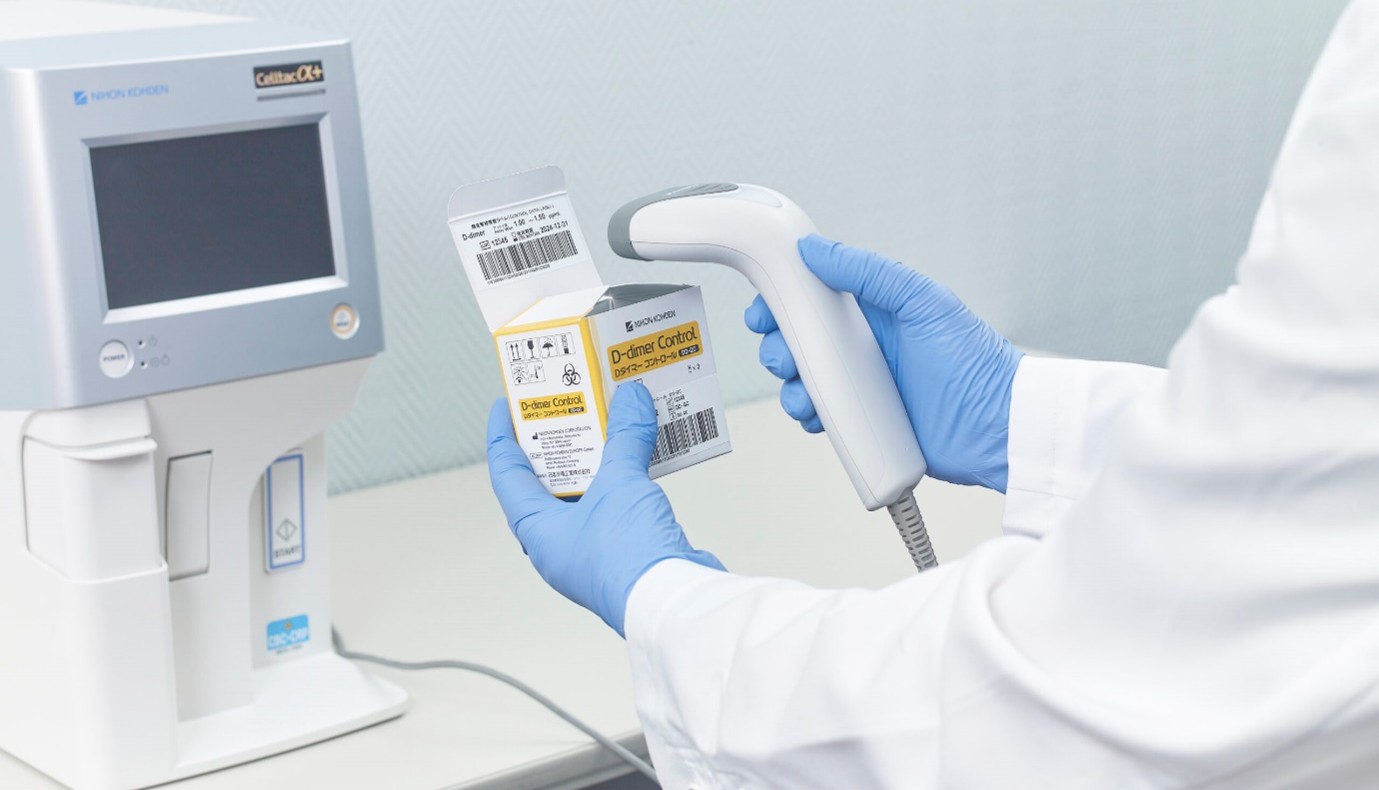
Discover how the introduction of D-dimer testing on the Celltac α+ MEK-1303 can help laboratories broaden their testing capability on a compact, established platform.
When venous thromboembolism is suspected, the diagnostic pathway must balance two important priorities: identifying patients who require further investigation and avoiding unnecessary testing in patients whose clinical assessment indicates a lower probability of disease.
D-dimer plays an established role within this pathway. It is not a stand-alone diagnosis, but when used appropriately alongside clinical pre-test probability, it can provide valuable information to help clinicians determine the next diagnostic step.
The launch of D-dimer testing on the Celltac α+ MEK-1303 further expands the capabilities of a compact platform already designed to support efficient laboratory testing.
Understanding the role of D-dimer
D-dimer is a fibrin degradation product generated when cross-linked fibrin is broken down. Its concentration can increase when coagulation and fibrinolysis have been activated.
However, an elevated D-dimer result is not specific to one condition. Raised concentrations may occur in several clinical circumstances like Deep-Vein Thrombosis, Pulmonary Embolism, and Disseminated Intravascular Coagulation.
Its principal value in suspected venous thromboembolism lies in supporting exclusion strategies for suitable patients when it is combined with a validated clinical assessment pathway. Local clinical protocols, approved assay characteristics and the laboratory’s validated cut-off must always guide result interpretation.
Why access to testing matters
Laboratories are under continuing pressure to provide clinically useful results while managing staffing, space, reagent inventory, quality requirements and operating costs.
These challenges can be particularly visible in:
• Small and medium-sized laboratories
• Satellite laboratories
• Emergency-care settings
• Community hospitals
• Private laboratories
• Decentralised testing environments
• Facilities where sample referral can delay access to results
Adding a new parameter to an existing platform may give these laboratories an alternative to acquiring and maintaining another dedicated system.
A new parameter on an established platform
The Nihon Kohden Celltac α+ MEK-1303 is an automated haematology and clinical chemistry analyser that provides CBC with three-part differential, CRP and HbA1c capabilities, together with DynaHelix Flow technology, closed-mode sampling, barcode operation, LIS connectivity using the ASTM protocol and Westgard multirules in QC mode.
The addition of D-dimer to the Celltac α+ MEK-1303 is more than an expansion of the test menu. It gives laboratories an opportunity to reassess how testing supports their local venous thromboembolism pathway.
Interested to learn more about how D-dimer testing on the Celltac α+ MEK-1303 could fit your laboratory’s workflow? Learn more: https://eu.nihonkohden.com/products/ivd/Celltac-Alpha-plus-MEK-1303
D-dimer availability and approved intended purpose vary by country. Please consult your local Nihon Kohden representative. For in vitro diagnostic use. For professional use only.