Saving a Life Is Never Just One Action
16. October 2026
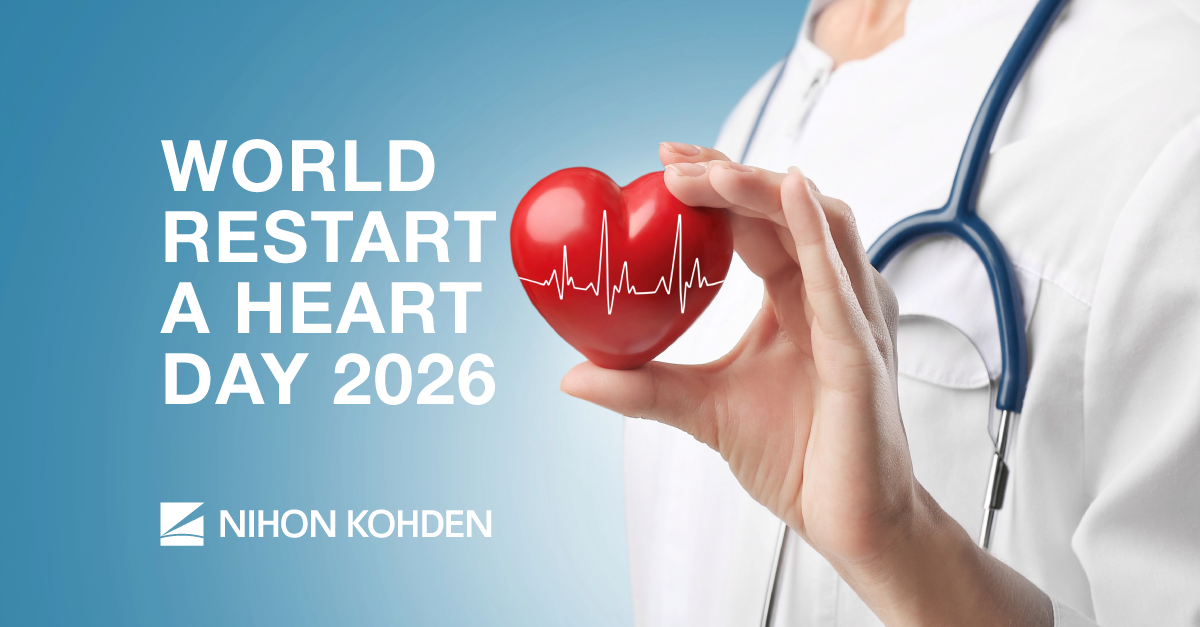
When a sudden cardiac arrest occurs, people often think of a single life-saving moment: CPR being performed, an AED delivering a shock, or emergency responders arriving on scene.
In reality, successful resuscitation is rarely the result of one action alone.
It is the outcome of a series of critical steps, each connected to the next, each contributing to a person's chance of survival and recovery.
On World Restart a Heart Day 2026, Nihon Kohden highlights the importance of the Chain of Survival and the collaboration between bystanders, first responders, healthcare professionals, and medical technology that helps save lives every day.
Understanding Sudden Cardiac Arrest
Sudden cardiac arrest is one of the most time-critical medical emergencies.
It occurs when the heart unexpectedly stops pumping blood effectively, preventing oxygen from reaching vital organs, including the brain.
Without rapid intervention, the consequences can be irreversible within minutes.
This is why improving survival is not dependent on a single device, treatment, or individual. It requires a coordinated response where every second and every action matters.
The Strength of the Chain of Survival
The concept of the Chain of Survival demonstrates that successful resuscitation relies on several interconnected elements:
Early Recognition
Recognizing the signs of cardiac arrest and activating emergency medical services immediately.
Early CPR
Providing chest compressions to maintain blood circulation while professional help is on the way.
Early Defibrillation
Delivering defibrillation as quickly as possible when indicated, helping restore a normal heart rhythm.
Advanced Resuscitation
Supporting the patient through advanced clinical interventions, monitoring, ventilation, and emergency care.
Post-Resuscitation Care
Ensuring continuity of care to support recovery and improve long-term outcomes.
The effectiveness of each link directly influences the strength of the next.
Advancing Resuscitation When Every Second Counts
The moments following a cardiac arrest are among the most critical in healthcare. Success depends on the ability to act quickly, make informed decisions, and deliver effective treatment without delay.
At Nihon Kohden, we have built our resuscitation portfolio around these needs. Designed to support both lay people in a public or private area, as well as healthcare professionals in high-pressure environments, our solutions help enable rapid intervention, support clinical decision-making, and facilitate continuity of care throughout the resuscitation process.
Whether responding to a cardiac emergency, delivering life-saving defibrillation, or monitoring a patient's condition during ongoing treatment, Nihon Kohden technologies are designed with one objective in mind: helping clinicians focus on saving lives.
Because behind every successful resuscitation is not just technology, but the possibility of giving someone another chance in life.
Explore our Resuscitation Portfolio: https://eu.nihonkohden.com/products/resuscitation